We are now deep in the second week at COP29 in Baku, where delegates from nearly every country are gathered to tackle the global climate crisis. Here’s an update on what’s been happening:
Background on the COP process:
The United Nations Framework Convention on Climate Change (UNFCCC) came into effect in March 1994, after 198 countries signed this international treaty. In the following years, the parties (signatories) to the UNFCCC convened at a Conference of the Parties (COP). The Kyoto Protocol, adopted in 1997, extended the Convention’s goals until 2020, focusing on climate mitigation and emissions reduction. In 2015, COP21 brought the adoption of the Paris Agreement by 195 parties. This Agreement furthered commitments in addressing the increasingly pressing issue of climate change. The Agreement also set a global target to limit the rise in temperature to no more than 1.5°C above the pre-industrial mean global temperature.
Each year, COP brings together representatives from across the globe to advance the mission of the UNFCCC and the Paris Agreement. Alongside national delegations, intergovernmental and non-governmental observers also participate in the process. I am attending COP29 through an accredited NGO delegation within the Research & Independent NGOs constituency group.
Here’s what’s going on:
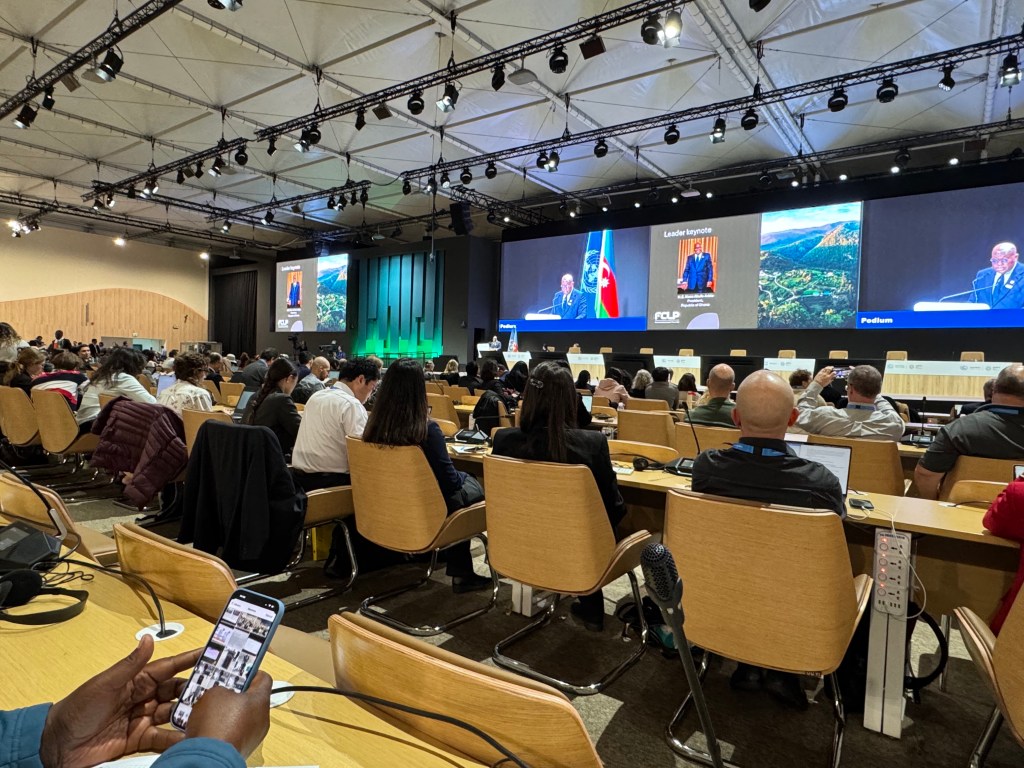
Among the tens of thousands of people gathered here in Baku are negotiators, world leaders, intergovernmental observers, civil society groups, and members of the press. Over the two weeks of COP29, negotiators from parties to the UNFCCC and the Paris Agreement meet to refine and work out details of these documents. Observer constituencies are provided opportunities to present their positions at some of these events, offering a chance for civil society to have a voice in the negotiating room.
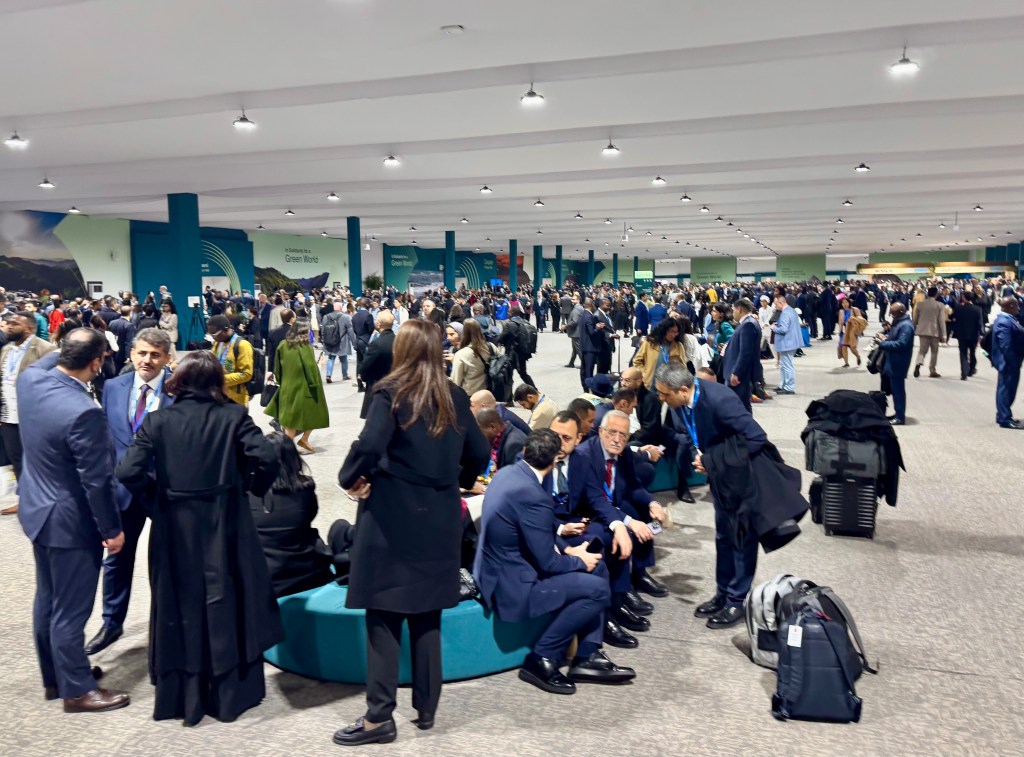
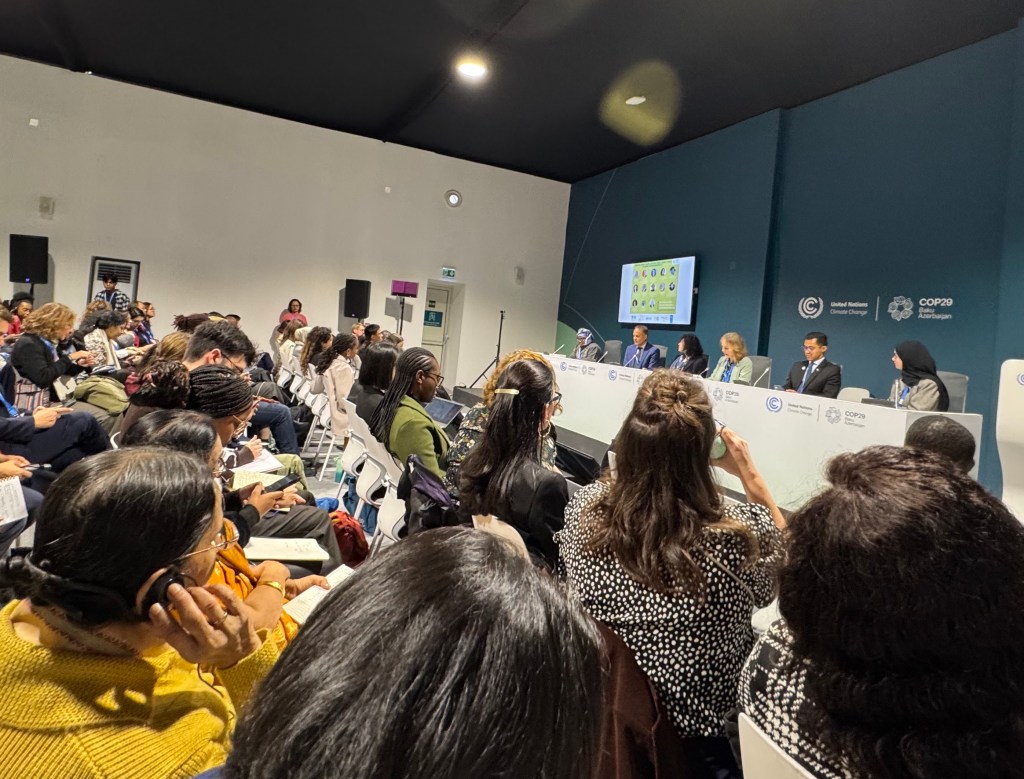
Meanwhile, hundreds of side-events led by observer organizations are happening in adjacent rooms and in the pavilions sponsored by delegations. World leaders—at both the national and subnational levels—are here to offer remarks and join in the conversation. Meetings between national delegates and observer groups regularly take place. And, of course, the rooms and corridors of Baku Stadium are filled with debates, demonstrations, and conversations, all aiming to promote solutions to climate change.
Key topics and themes at COP29:
NDC 3.0
The Paris Agreement requires each country to submit a Nationally Determined Contribution (NDC) every five years, outlining its climate action commitments. Within these documents, each country determines its own emissions goals, with increasingly ambitious targets set for each round. With the third round of NDCs (“NDC 3.0”) due in February 2025, this topic has been a subject of much discussion here at COP29.
Observers are urging countries to submit NDCs that are comprehensive and ambitious, yet achievable by the target date of 2035. It is critical that these goals include all relevant greenhouse gases and assess the impact of all significant emissions sources, including those not directly the result of anthropogenic forces, such as wildfires.
There is a call for NDCs to be equitable and inclusive through the implementation of programs to support demographics most impacted by climate change. Indigenous people from around the world have come together to advocate for NDCs that address climate adaptation in their communities. These groups have also urged negotiators to include indigenous and other highly affected, underrepresented people in the conversation to most accurately assess their needs in response to climate change.
Within the next few months, we will hopefully see how each country defines its 2035 emissions targets, providing an indication of its commitment to tackling global climate change. Setting ambitious targets now is critical for staying below the 1.5°C goal included in the Paris Agreement.
Methane and other non-CO2 greenhouse gases
While much of the public climate discourse still focuses on carbon dioxide (CO2), other greenhouse gases, such as methane and nitrous oxide, are also major contributors to global warming. Although it exists in lower concentrations in the atmosphere, methane is much more effective at trapping heat, making it a more potent greenhouse gas. The current atmospheric methane concentration is 265% higher than the pre-industrial level in the year 1750. In that same period, the concentration of CO2 has risen to 151% of the pre-industrial level.
Negotiations and observer discussions are increasingly discussing the reduction of these non-CO2 greenhouse gases. There is renewed accountability for countries to include these pollutants in their NDCs. For example, China did not directly address non-CO2 greenhouse gases in its previous NDC, drawing criticism from other countries and civil society. Incorporation of these additional pollutants will facilitate more accurate and effective emissions targets.
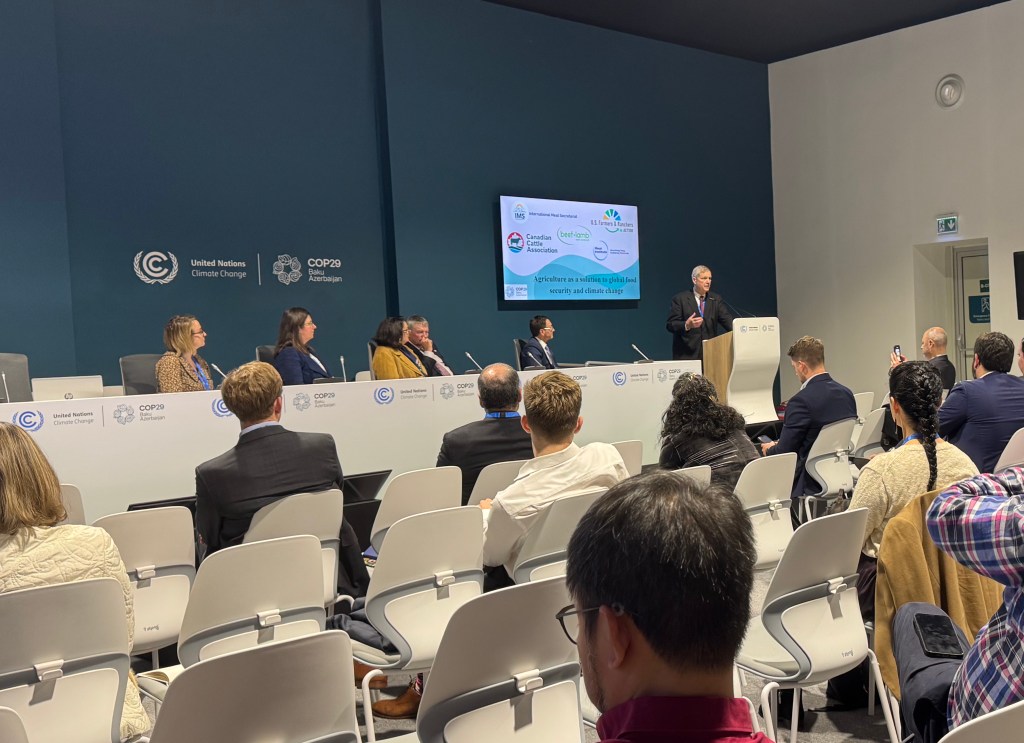
Numerous side-events have explored opportunities for reducing methane emissions in the agriculture, waste management, and fossil fuel industries. These strategies include selective breeding and genetic engineering of cattle, introduction of novel landfill practices, and capture and use of methane by-products from the agriculture and fossil fuel extraction.
Climate finance
The largest issue at COP29 is climate finance, earning this event the nickname “the finance COP.” Parties are focused on implementing the New Collective Quantified Goal (NCQG), financial mechanism of the Paris Agreement to fund climate change mitigation and adaptation projects in developing countries. The NCQG will combine financial commitments from the private sector and governments in developed nations. There has been some debate about how countries are categorized as “developed” or “developing” in this context, which affects their responsibility and eligibility under the NCQG.
Observers and activists are advocating for an ambitious, inclusive, and transparent NCQG. These elements will ensure that there is sufficient funding to reduce the climate impact of developing nations and that the money is reaching projects that effectively address the needs of these countries in a timely manner.
NCQG is ultimately about cooperation and solidarity around the issue of climate change, which is not limited to individual nations. We hope to see a solidified structure and a dollar amount to the NCQG by the end of COP29.

United States and climate change in the second Trump presidency
With a second Trump presidency looming, the world is wondering what energy and climate policy will look like in the United States. In his first term, President Trump left the Paris Agreement, a move that was later undone by President Biden. It is likely that Trump will repeat this, and he has further suggested removing the country from the UNFCCC treaty altogether.
On Saturday, a press conference with Republican members of the US House Committee on Energy and Commerce painted a rather depressing picture of what the American energy and climate future will soon look like. In stark contrast to most other sentiments at COP29, this panel emphasized the importance of fossil fuels and energy security on the American economy. Among the topics discussed were the prioritization of emissions control and capture instead of reducing fossil fuel use, the importance of “clean coal,” and the emergence of fusion power (which is many decades away from a usable scale). These politicians made it clear that funding for green energy sources is not a high priority when there are untapped fossil fuel opportunities on American soil.
Representative August Pfluger from Texas’s 11th District suggested removing the US from the Paris Agreement, noting that providing climate finance to the rest of the world is actively hurting American people. Instead, Rep. Pfluger suggested that we “unleash American energy” onto the world.
If you’re interested in watching the entire press conference, you can do so here.
Meanwhile, Democratic politicians here at COP29 offered a different message. Leaders like Governor Jay Inslee of Washington have highlighted the impact of subnational governments can have on furthering green energy programs even as federal funding and initiatives dry up. Additionally, Inslee and others are keen on pursuing continued bipartisan support for nuclear energy—the one green energy option that might survive an all-Republican federal government. Significant advances in providing nuclear power to American people will likely come in the form of small, modular reactors that can be implemented at the state level. These efforts will not remove our dependence (and insistence) on fossil fuels, but they will provide some continuity in developing green energy and green jobs during the second Trump presidency.

 corey husic